
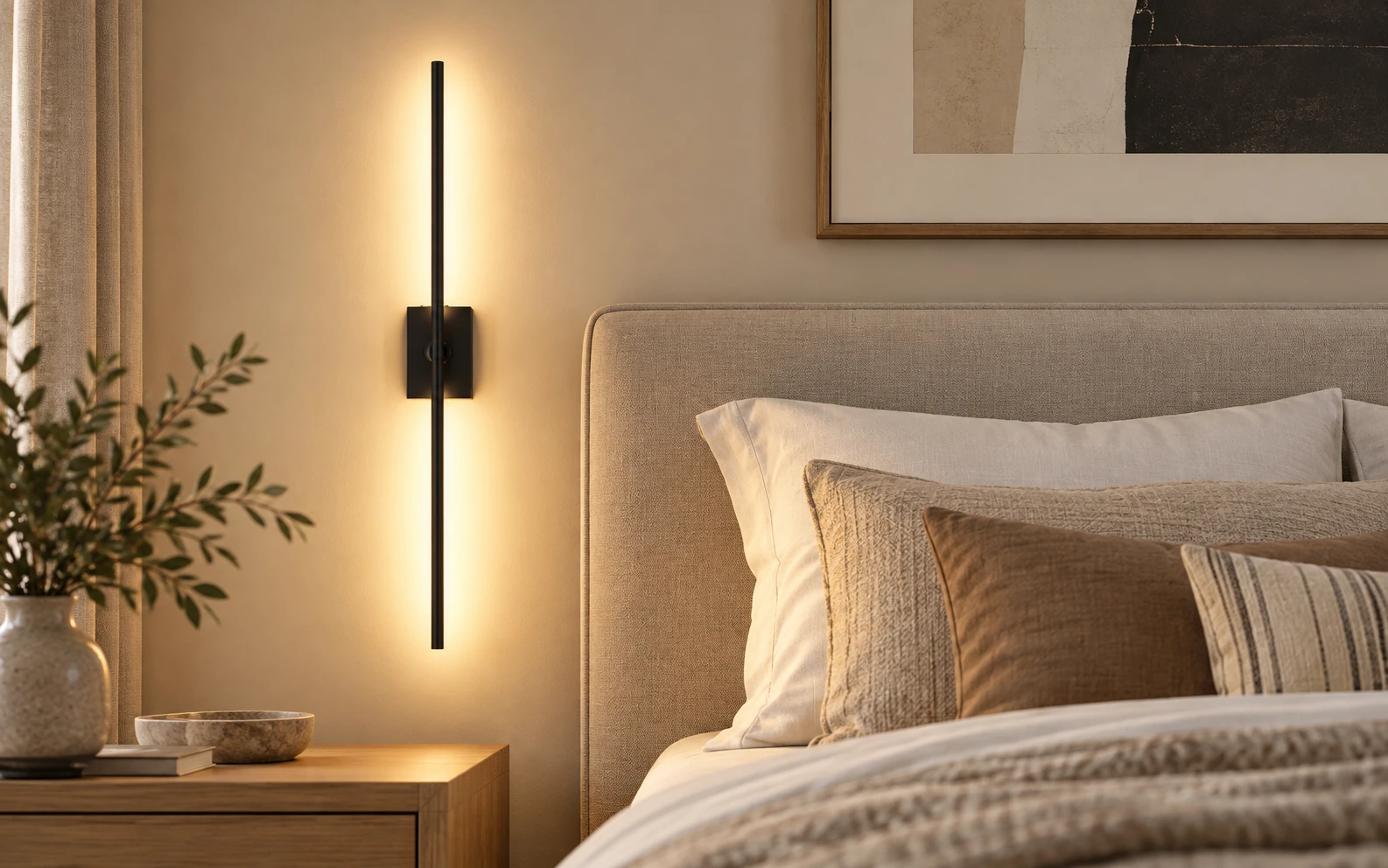
A long strip LED wall sconce can add a clear line of light without taking up space on a nightstand or side table. In a bedroom, it can frame a headboard or brighten a reading corner. In a living room, it can draw the eye toward a textured wall, a favorite print, or a quiet seating area. A wire-free design makes placement more flexible because it does not depend on a nearby wall outlet or a new wiring route.
The best result comes from treating the light as part of the room plan. Consider what you want illuminated, where people sit or walk, and how the fixture will look when it is switched off. Then check the practical details: mounting, charging, controls, and how the beam can be directed.
Why a Long Strip LED Wall Sconce Works in a Bedroom or Living Room
A linear wall light introduces a vertical or horizontal accent that can make a plain wall feel more intentional. Its slim profile can suit a calm bedroom where table surfaces are already busy, while a living room can use a long strip to balance a tall cabinet, sofa, or artwork. The light also creates a useful visual layer between ceiling lighting and smaller lamps.
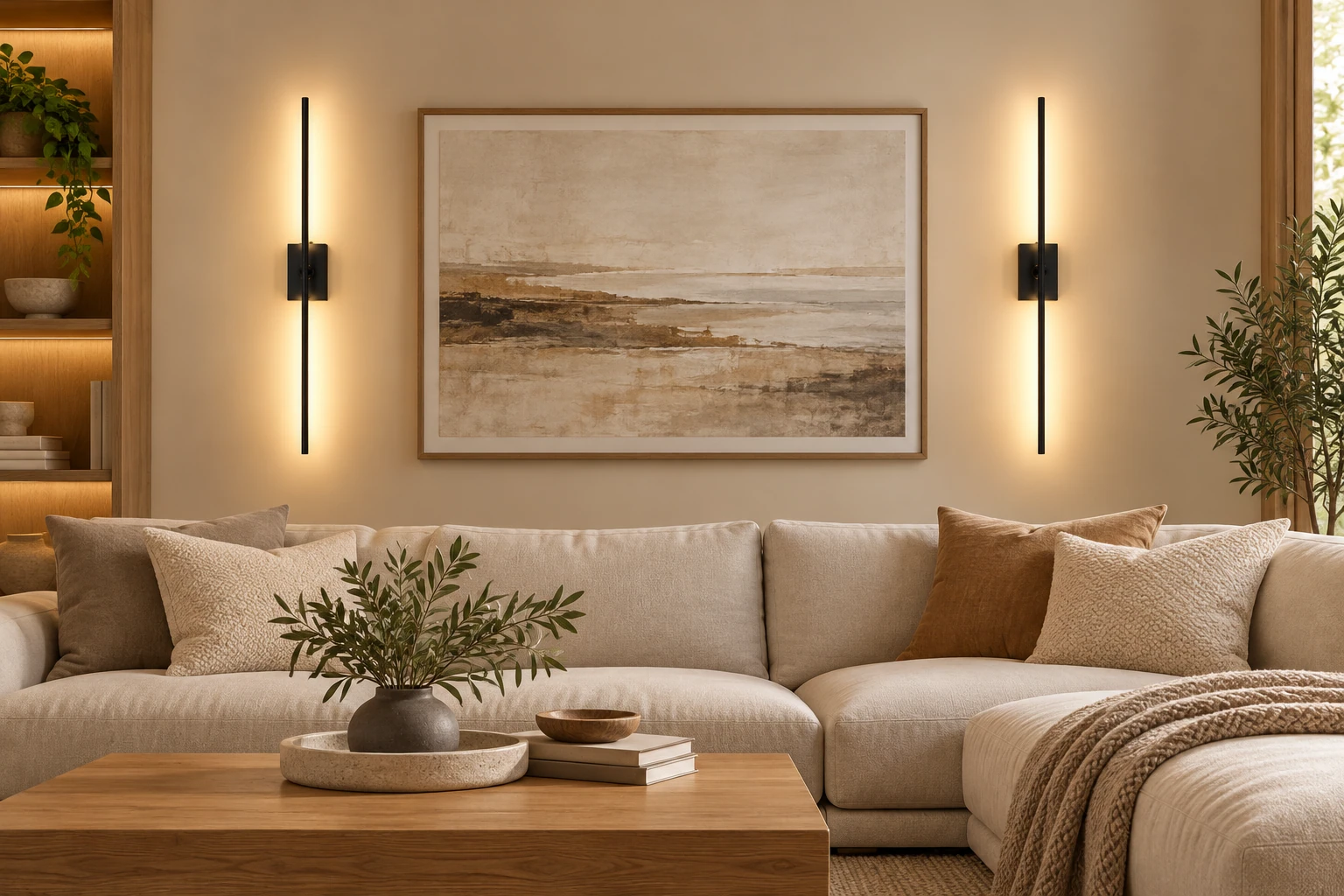
Think of a wall sconce as supporting the room rather than doing every lighting job. A wall light can provide a soft background glow or help define a reading spot, while a ceiling fixture or task lamp handles broader or more focused illumination. This layered approach helps the space feel comfortable at different times of day.
Choose a Placement That Serves a Real Task
In a bedroom, position a wall light where it can be reached from the bed and where its brightness will not shine directly into a resting person's eyes. For a reading nook, consider the chair, the page, and the direction of the light together. In a living room, a linear sconce can highlight a wall treatment or add gentle light beside a sofa, but keep it clear of door swings and high-traffic paths.
- Mark the proposed fixture position with painter’s tape and view it from the bed, sofa, and doorway.
- Check that the light will not compete with a television screen or reflect sharply from glass and polished surfaces.
- Leave comfortable clearance around nearby shelves, artwork, curtains, and furniture.
- If installing a pair, measure from a shared reference point so the lights align cleanly.
A wire-free wall sconce is especially helpful when you want to avoid adding a new hardwired connection. The OUYULONG catalog’s rechargeable light bar is listed at 31.6 inches and can rotate 350 degrees on its mount, giving you room to adjust its direction after installation. Its battery-powered format is designed to lift off the wall plate for Type-C charging, then click back into place.
Plan the Light Direction and Mood
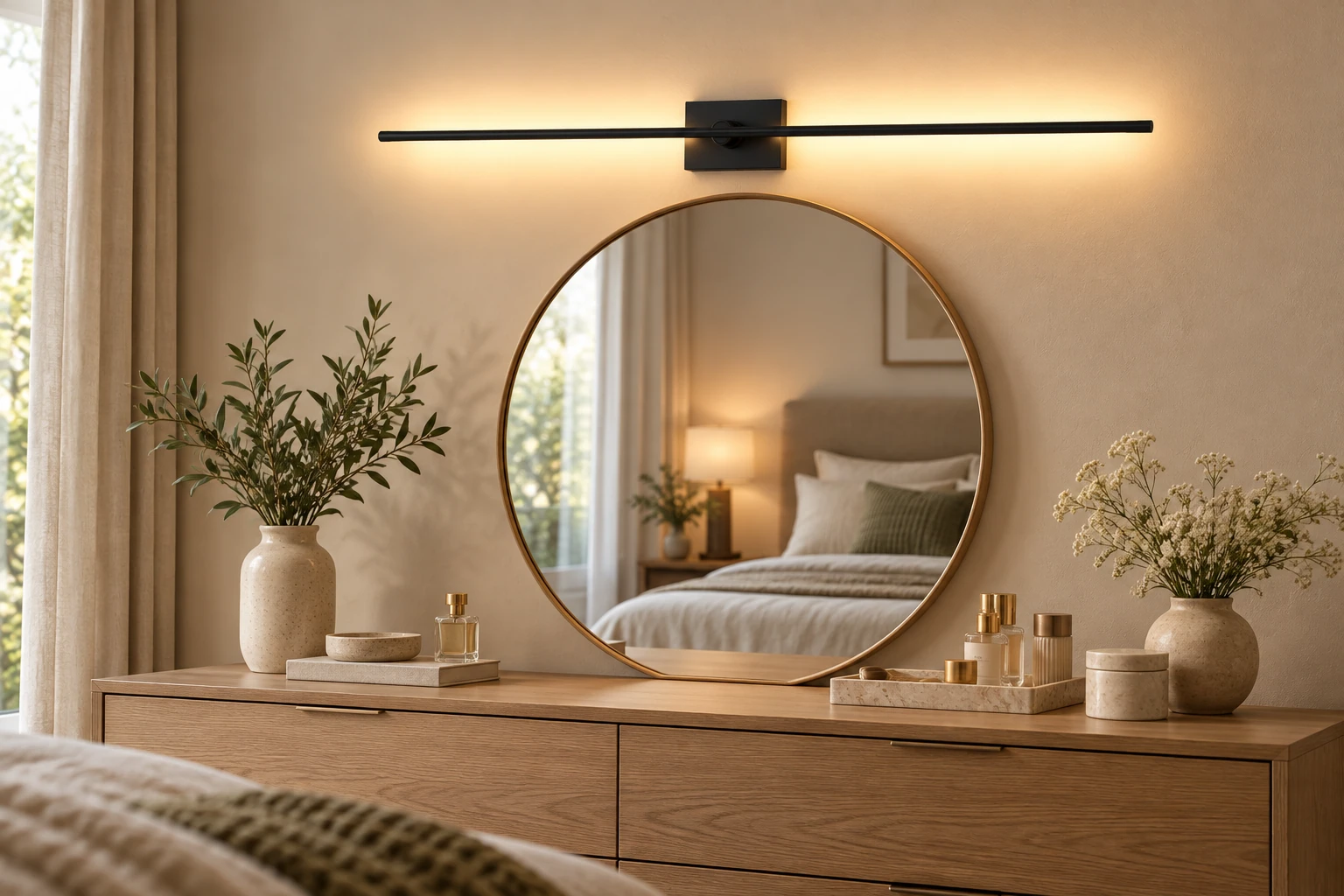
A long fixture can read as a strong graphic line, so decide whether you want it to blend into the wall or become a feature. A dark finish can create a crisp outline against a pale wall; a brushed-gold finish can add a warmer accent. Keep nearby finishes in mind, but avoid matching every metal in the room exactly. Repeating one finish in a frame, handle, or lamp base is often enough.
Direction matters as much as placement. Aim a rotating light bar toward the surface you want to reveal, then test it from the places where you spend time. Washing light across a textured wall can make the texture more noticeable; directing it toward artwork can make that area feel deliberate. For relaxed evenings, use dimming if the selected model supports it, and choose a brightness that adds atmosphere without becoming the room’s only source of light.
Check Charging, Controls, and Mounting Before You Buy
Wire-free does not mean maintenance-free. A rechargeable fixture needs a convenient charging routine, and a removable light should be easy to take down and return to its mount. Before choosing a model, confirm the charging connection, included controls, battery details, and the mounting instructions in the product specifications. Catalog details for the OUYULONG light bar describe touch control on the fixture and a remote for reaching lights that are mounted higher or farther away.
Also check the wall surface and the hardware supplied with the specific item. Follow its installation guide, use fasteners suited to the wall, and avoid mounting over a spot where the fixture could be knocked during everyday movement. For a rental or a delicate surface, confirm whether the chosen mounting method is permitted and appropriate before making holes.
A Simple Room-by-Room Styling Approach
For a bedroom, a linear sconce can make a headboard wall feel finished while freeing the bedside table for essentials. Keep the light placement balanced with the bed and choose a direction that supports winding down. For a living room, use one fixture to introduce a vertical accent near a seating area, or pair two lights where a wider wall needs a more even composition. In either room, leave enough visual breathing space so the fixture does not crowd nearby art or shelving.
Before finalizing the arrangement, switch off other lights and look at the wall in the evening. Notice whether the sconce creates a comfortable glow, whether the beam lands where intended, and whether the fixture feels proportionate to nearby furniture. Small placement adjustments can make a larger difference than adding more decorative objects.
A long strip LED wall sconce brings shape and useful light to bedrooms and living rooms, while a wire-free format can make installation and placement more flexible. Start with the room’s task, confirm how the fixture mounts and charges, and direct the light toward a surface or activity that matters. Explore OUYULONG’s rechargeable wall lighting options to compare a slim light bar with other wall-sconce styles.